



![[Taiwan]](images/flags/Taiwan.gif "Taiwan")

 Re: A waffling post with some Taiwan frogs
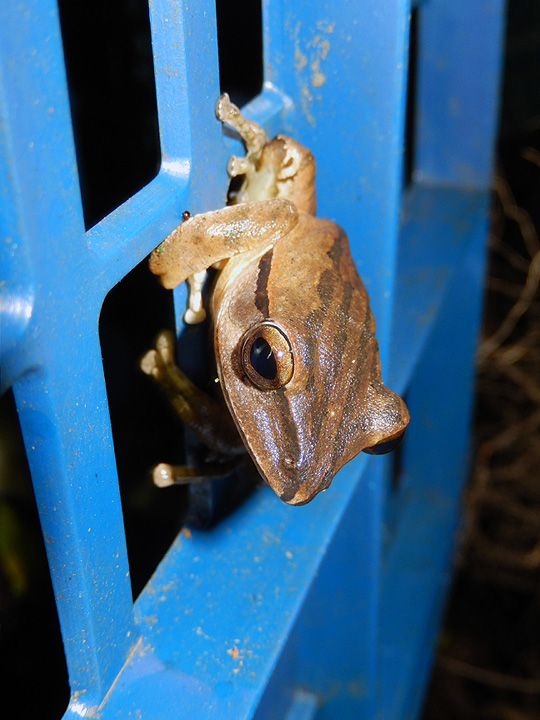
On the way back I stopped off at a hill just outside of Xindian, a suburb of Taipei City. There's a small-scale farming area there, again with lots of buckets, boxes, etc. These seem to be used as water containers in case of drought (such as the one Taiwan had been suffering for some time), which can be quite convenient for frogs looking to lay eggs. I used to think these farmers were good stewards of the tadpoles, some of which are protected species, but I'm not so sure now. Again, more on this later.
Anyway, it was raining, so there were quite a few species to be seen. More of that damned man-made stuff in almost all the pictures.
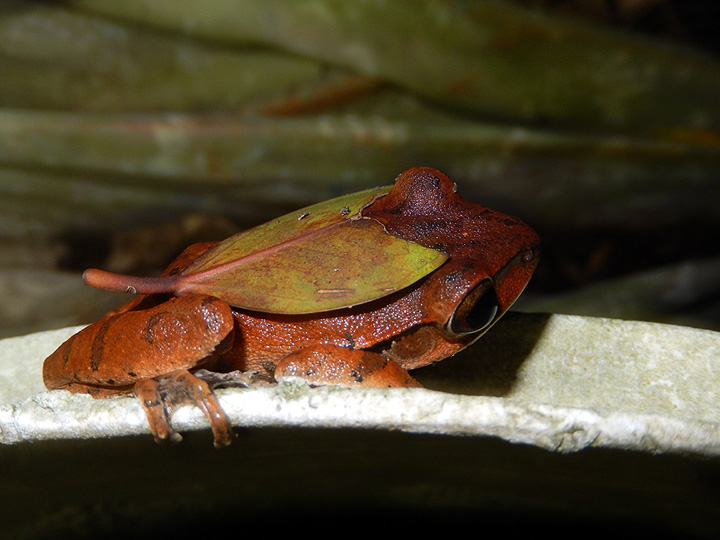
Polypedates braueri. Trying to hide behind a leaf? Not a chance mate!
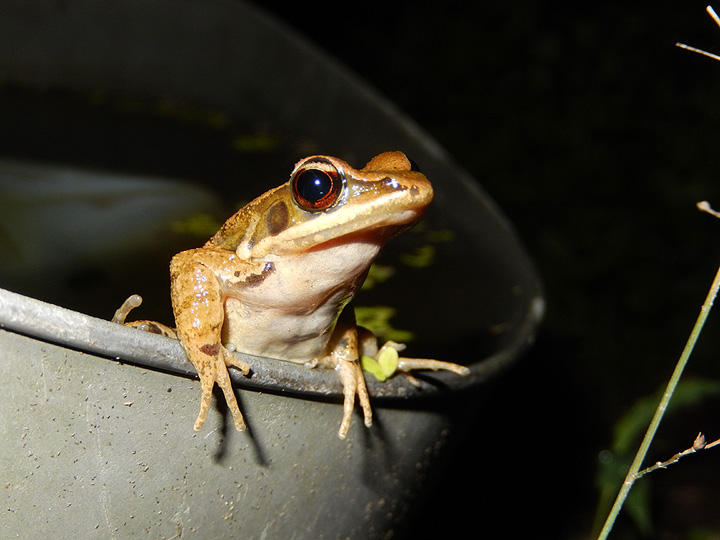
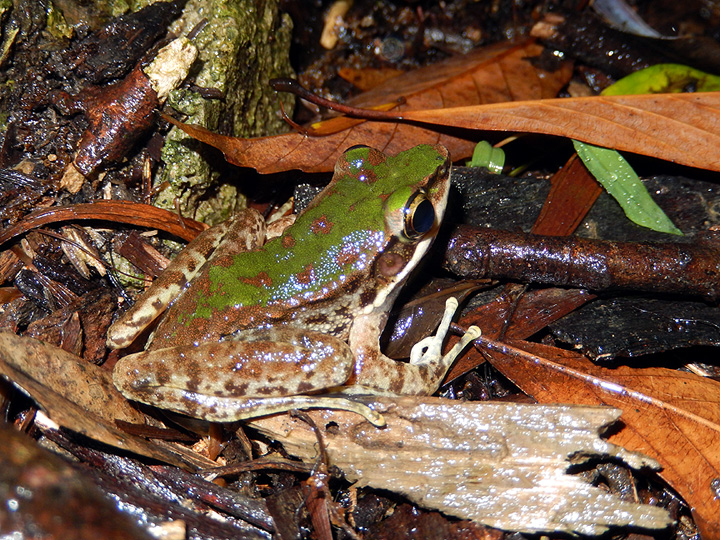
Hylarana latouchii.
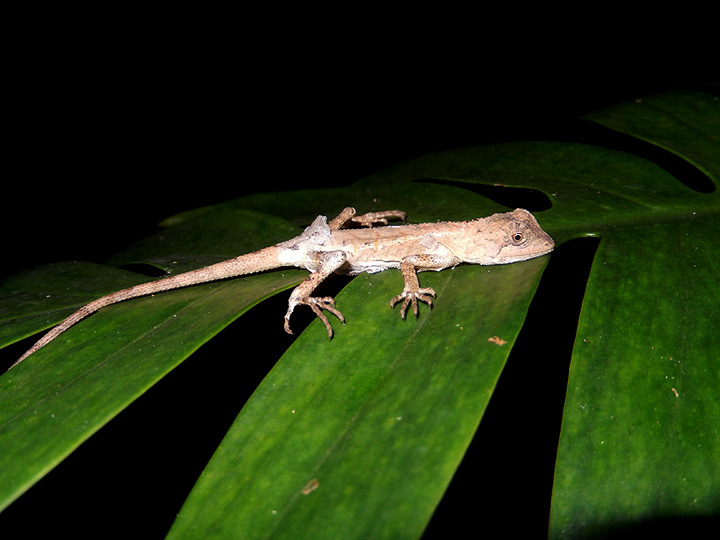
A sleeping, resting, or possibly wide-awake japalura. I could try to find out exactly which species this is, but I probably won't.
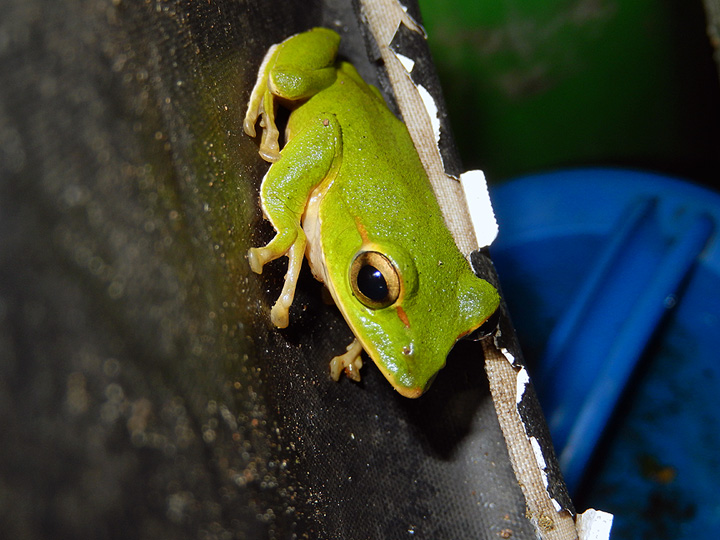
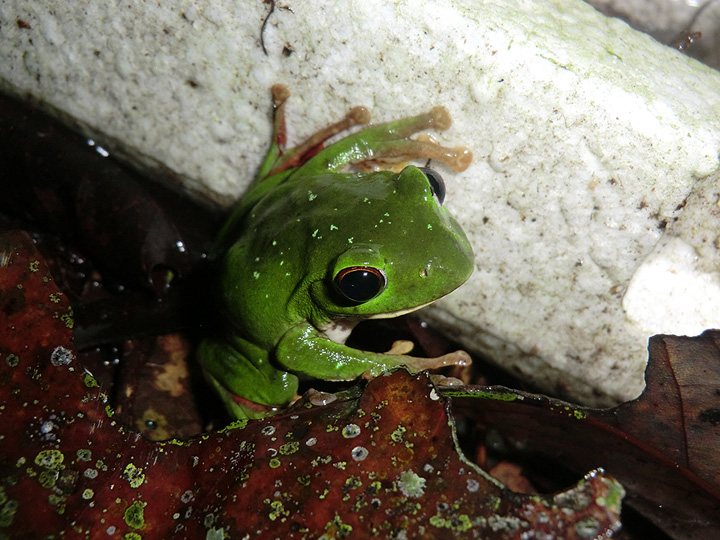
The emerald tree frog, Rhacophorus prasinatus, Class III protected species, and endemic to northern Taiwan.
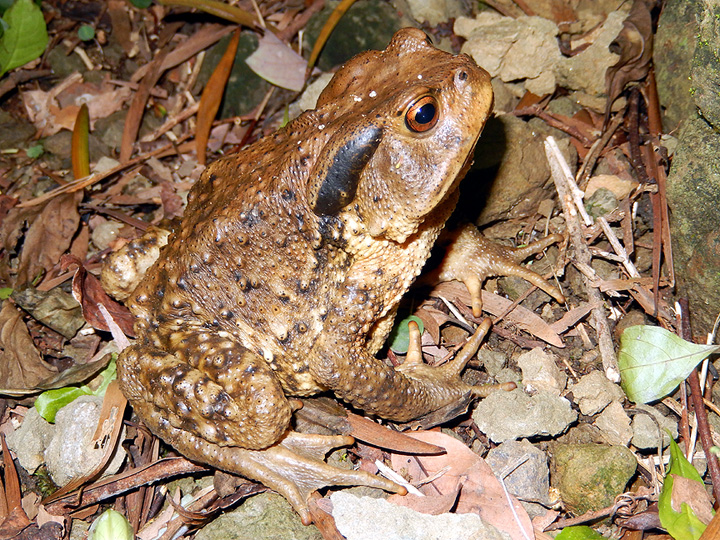
And the always bold Bufo bankorensis. Common as muck, but found only in Taiwan.
A few days later I had an early morning walk in YangMingShan National Park, just north of Taipei. No frogs this time, but a few reptiles, most of which I was too slow to photograph.
Another japalura I'm too lazy to identify.
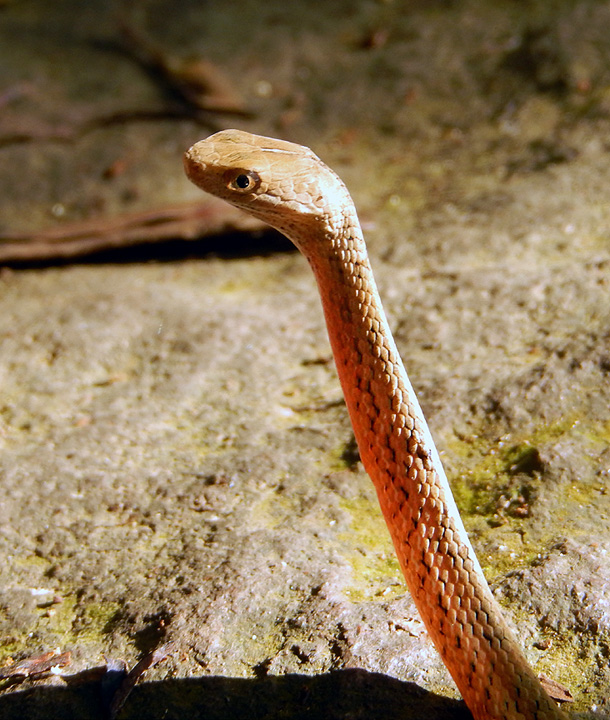
And, I think, a mock viper (Psammodynastes pulverulentus) right in the middle of the path. I shooed it off before any lethal snake-fearing hikers passed by. I've seen enough smashed snakes to know that some people will kill any snake they meet. This one is rear-fanged and mildly venomous, and as the name suggests mimics true vipers as a means of defense. That's if I'm right about its being a mock viper, of course. If it isn't, just ignore all that.
Okay, back to Wulai and Xindian a couple of weeks later. Another rainy day. First stop, south of Wulai. (Actually, that makes it sound easier than it really is ... by public transport there are quite a few stops along the way.) Same spot as before, and more (or the same) R. moltrechti. And more styrofoam and tarps.
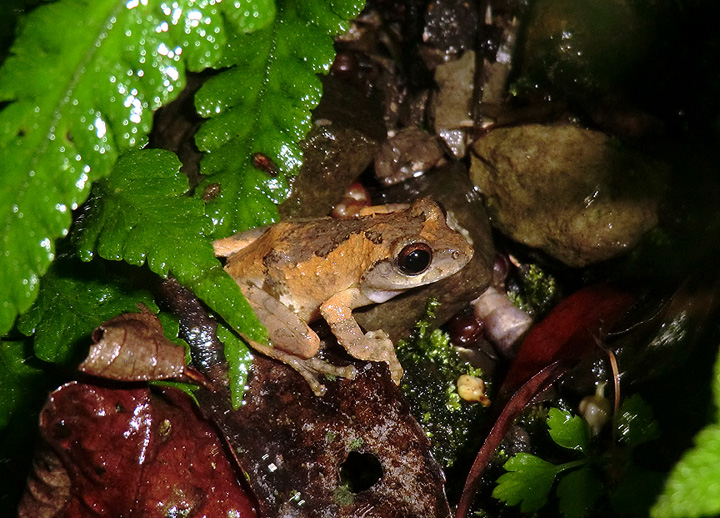
Another big-headed, big-fanged Limnonectes fujianensis, and another crappy picture.
Further back on the path, more tree frogs.
The "Japanese" Buerger's frog, Buergeria japonica. Although it's a Rhacophorid, as far as I know it doesn't usually hang out in trees. I've never seen one in a tree anyway. It has a few interesting quirks ... some populations take advantage of hot springs to breed year-round, with water getting up to 40 degrees C. They'll also breed in coastal areas, albeit in only mildly brackish water.
More Kurixalus idiootocus.
At a similar spot as the last time, probably the same R. moltrechti, striking similar poses, but on the other side of the path. Show off.
And a robust Buerger's frog, Buergeria robusta. I've seen males of this endemic species further south that were bright yellow. (I've even posted pictures of them here somewhere.) I don't know if that's a geographical thing, or more to do with their being in breeding mode. Probably the latter.
And farther along the road, an emerald tree frog. I was puzzled by it at first ... a much darker shade of green than I'd previously seen. It looks pretty bright in this picture though.
Back in Xindian, it was rainy but cold. I was surprised by the lack of frogs calling on the hill. Just a little too cold, I guessed. I noticed that a few of the tadpole-filled buckets from a couple of weeks before looked much emptier, of both water and tadpoles (especially of R. prasinatus). This was after a week of blisteringly hot weather, and the imposition of water restrictions on parts of New Taipei City, and it looked like the farmers had been using the stored water for their crops. I've no idea about the legal status of this in regards to tadpoles of a protected species, or even if the relevant authorities know about the presence of R. prasinatus (or if do, if they care) ... I'll have to look into it.
Anyway, there were a few additions to last time. Fejervarya limnocharis ... looking very gravid ...
And the local torrent frog, the whistling Odorrana swinhoana, endemic to Taiwan.
I wasn't finished with Xindian though. A week later, once again in wet - but this time warmer - weather, I went back to the hill, curious to see if the conditions had brought out one of my favourites, the rasping Microhyla fissipes. And it had.
Okay, that's enough for now. Thanks for looking if you made it this far. (Which you obviously did, or you wouldn't be reading this.) And sorry that it was - as suspected - a seriously rambling post. I hope there was some interesting information in among the word spaghetti.











 Reply With Quote
