

![[United States]](images/flags/United States.gif "United States")
 Re: dubia
Any amount can be adequate, but it depends on the care you provide and the amount of time you are willing to wait. Patience is key with breeding roaches... what are you feeding and how many roaches are you feeding daily? What time frame would you like to begin feeding?Originally Posted by Owler

Just to give you a reference, each female will produce about 10-15 nymphs that may be used as feeders each month; it is not uncommon for them to produce double this but you will need to have an adequate amount of nymphs to hold back for future breeding projects. I always figure that half of my nymphs can become feeders while the other half being produced will become future breeders to take the place of those that pass on. Looking at it from a conservative perspective will help to prevent future headaches of having not bought enough to start with or having fed off too many - which results in a loss of time and money, thats the last thing we want! = )
So, lets say you feed 10 nymphs daily - If you want to actually be feeding out of your colony, you will need to have at least 50-60 adult females and a good quantity of mixed nymphs that can be fed off. The more the merrier, and in all honesty you can never have too many roaches. It is far better to have way more than you need and be able to feed them off endlessly as an infinite food supply than to question your quantity and begin losing numbers of breeding stock that will set you back. Keep in mind dubia are slow growers, if you need a particular size, it can take a month or two for the nymphs to actually reach that size for feeding. From newborn to adult can take as long as 5 months, then you need at least a months gestation before the females can give live birth to start the process over. Females can live 12-18 months and will produce 20-30 nymphs monthly for you during this time if husbandry is spot-on.
The number one thing to keep in mind is patience: You can start with 50 newborn nymphs and have a pretty solid colony by the following year, or you can start with 500 mixed sized nymphs and some adults and have a colony ready to rock within a month or two (depending on how many you feed off). Always buy more than necessary and give them time to settle and begin breeding to establish themselves before feeding them off. As those nymphs become adults, babies will be erupting everywhere and you can more safely begin feeding. I rarely recommend feeding out of a colony immediately unless you have at least 500-1000 mixed sized nymphs and a good mix of adults, otherwise give them time to get established for a couple of months. Again, this partly depends on how many you feed and the species or number of mouths you are feeding... I prefer to aim high because I mainly deal with bearded dragon owners whose animals consume abolsutely insane quantities of food.
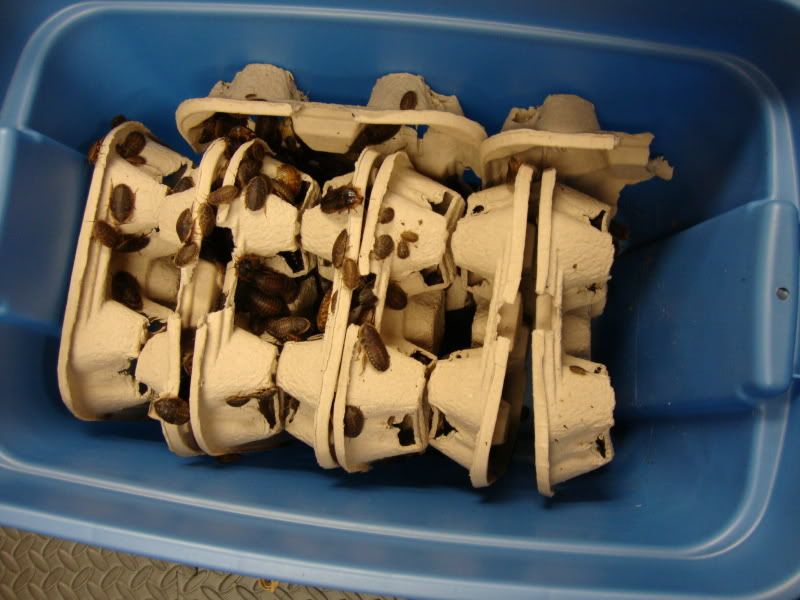
Husbandry also plays a factor - Keep them warm, give them plenty of hides, keep them well fed and well hydrated, and allow them to have their privacy and they will breed for you. Remember roaches are an investment; it will be a little costly to get started and you will have to wait a bit for them to become established, but once they do you will have an endless supply for years to come. The real security comes once a lot the nymphs hit maturity and can begin breeding, those 100 nymphs will eventually become adults, which will crank out TONS of nymphs.
On a side note, oranges are great items to add to the diet but I believe the real reason they fare so well is more likely husbandry. We've done some tests using oranges as a staple hydration item in a variety of roach bins and found no significant difference in population size or growth (more of a placebo effect). Citrus fruits are naturally carbohydrate and moisture heavy, which are both good things for roaches. Actually, hydration is an issue commonly overlooked - keeping them well watered with fruits, veggies, and water crystals are going to prevent cannibalism and keep the roaches happy and producing, I'd actually rate hydration as more important than the commonly misconceived need for high-protein. = )


 Reply With Quote
 - a 150w heater should sort it!